


Do Less. Focus More. Care Carefully.
It’s easy for us to get stuck in our work—physically, mentally, emotionally. Let’s look beyond the usual self-care routines to find better ways to get unstuck and back to the work you love.
Are you a sleep saboteur? Do you put off going to bed so you can have some extra "me" time at the end of the day? Are you scrolling, reading articles, checking emails, or playing games until the wee hours of the night—conscious of time, yet resisting being governed by it? If so, you're in good company with this article's co-author, Nicole. Or perhaps you are one of the 35 percent of Americans who suffer from insomnia: Maybe you have trouble falling asleep, staying asleep, or difficulty sleeping through the night.1 Or maybe you consider yourself a decent or even good sleeper—but are you getting quality sleep?
Research recognizes that sleep is essential at any age, and yet according to Wayne Giles, MD, "As a nation, we are not getting enough sleep," because a third of Americans do not sleep long enough on a regular basis.2 According to the National Sleep Foundation, getting 7-9 hours of sleep a night for adults (and even more for children and teens) is crucial for resilient health, mental clarity, and emotional well-being. Yet, even if you're getting those recommended hours, if your sleep is frequently interrupted, you're not getting quality sleep. The quality of your sleep is just as important as the quantity.3
Many of us have experienced the dread of being wide awake, waiting to succumb to sleep, or struggling with the inability to fall back asleep once awoken in the middle of a sleep cycle. For some, simply creating new habits and routines can be a game changer, though for others these experiences may be an indication of a deeper underlying issue. Join us as we illuminate the unconscious life we live while we sleep, reveal the life-giving benefits of a good night's rest, and share biohacks of what we can do to get to sleep, stay asleep, and wake up feeling refreshed and restored.
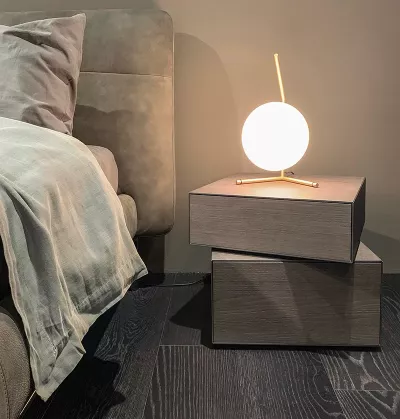
We spend on average of one-quarter to one-third of our lifetime sleeping.4 Since the 1950s, scientists have been observing the sleeping body, recognizing that sleep is essential for our survival. Sleep allows the body and mind to restore, recharge, and repair, as well as avert illness, disease, or premature death. Without enough sleep, the brain cannot function properly, leading to diminished concentration, muddled thinking, and inaccessible memories. Our internal body clock helps regulate our sleep cycles, telling us when we feel tired. It operates on a 24-hour cycle known as the circadian rhythm, which connects us to the patterns of light and dark expressed in nature. Once asleep, our bodies follow and repeat a sleep cycle divided into four stages, with each sleep cycle lasting approximately 90-120 minutes.
Why we sleep is still unknown, yet there are many theories. Continued research reveals that getting enough sleep is necessary for many biological reasons: energy conservation, cellular repair, brain plasticity, emotional stability, weight management, boosting immunity, lowering blood pressure, and reducing inflammation, to name just a few.5
Disrupted routines, extra screen time, alcohol consumption, and the blurring of boundaries between work and private life are just a few factors that contribute to poor quality and quantity of sleep. You know you're not getting enough quality sleep if you regularly have trouble falling asleep, your sleep is disrupted, or you feel foggy or tired throughout the day. Furthermore, your emotional and mental health are at stake. Research shows that "failing to get enough sleep can also make us feel sad, anxious, and depressed."6 Not getting the quality of sleep you need will slow your reflexes, undermine decision making, and may even dull creative expression. However, there are nightly and daytime practices each of us can do to reap all the benefits that come from a sound night's sleep.
Put into action all, some, or just one new sleep practice to make your sleep hygiene sparkle, and experience your most luxurious and satisfying sleep.
Your bedroom environment is key to a night filled with consistent multiple sleep cycles.
Because stress and anxiety are often to blame for sleepless nights, practices that activate your relaxation response can calm your mind, relax your body, and help you naturally drift off to sleep. Here are some ways to help put yourself to bed:
Getting the quantity and quality of sleep you need every night is vital to your health and overall well-being. While chronic or acute pain, worry, or anxiety may keep you from falling asleep, not getting enough sleep can exacerbate and make these problems worse. Everyone is different, so figuring out what works best for you takes some time. When Heath invested in a biometric watch, he started to notice, and was surprised to discover, how poorly he was sleeping, regardless of getting the recommended 7-9 hours a night. It was through trial and error that he learned to change or avoid how he used alcohol and caffeine during the day to experience his best rest.
Discover your best recipe for restful nights and refreshed mornings with one of these sleep hygiene practices. Over the next few weeks, notice which practice (or combination of practices) unlocks your most satisfying sleep. The great news about sleep is that it's never too late to get a good night's rest. Sleep well and sweet dreams!
1. Eric Suni, SleepFoundation.org, "What Causes Insomnia?," updated November 22, 2021, www.sleepfoundation.org/insomnia/what-causes-insomnia.
2. Centers for Disease Control and Prevention, "Are You Getting Enough Sleep?," accessed February 2022, www.cdc.gov/sleep/features/getting-enough-sleep.html.
3. Eric J. Olson, MayoClinic.org, "How Many Hours of Sleep are Enough for Good Health?," accessed February 2022, www.mayoclinic.org/healthy-lifestyle/adult-health/expert-answers/how-many-hours-of-sleep-are-enough/faq-20057898.
4. Johns Hopkins Medicine, "The Science of Sleep: Understanding What Happens When You Sleep," accessed February 2022, www.hopkinsmedicine.org/health/wellness-and-prevention/the-science-of-sleep-understanding-what-happens-when-you-sleep.
5. Healthline.com, "What is the Purpose of Sleep?," accessed February 2022, www.healthline.com/health/why-do-we-sleep.
6. Division of Sleep Medicine at Harvard Medical School, "Sleep and Mood," last reviewed December 15, 2008, https://sleep.hms.harvard.edu/education-training/public-education/sleep-and-health-education-program/sleep-health-education-40.
7. American Sleep Association, "Essential Oils for Sleep," accessed February 2022, www.sleepassociation.org/sleep-treatments/essential-oils-for-sleep.
It’s easy for us to get stuck in our work—physically, mentally, emotionally. Let’s look beyond the usual self-care routines to find better ways to get unstuck and back to the work you love.
Therapy tools can help massage therapists with pain or limited mobility.
Transdermal magnesium can help massage therapists and bodyworkers in their self-care.
Self-defense skills can help MTs feel safer and more confident in the treatment room.