
Do Less. Focus More. Care Carefully.
It’s easy for us to get stuck in our work—physically, mentally, emotionally. Let’s look beyond the usual self-care routines to find better ways to get unstuck and back to the work you love.
Enjoy your breath. Notice when you are breathing in, and observe when you are breathing out. Continue to luxuriate in the beauty and majesty of your biology, breathing as you read on, and ask yourself, "How do I know what is true for me?"
Now, float this question around and within you for a few breathing cycles; create space for insight to emerge and allow the wisdom of your body sensations to respond. You may need to ask the question several times before a response arises from within.
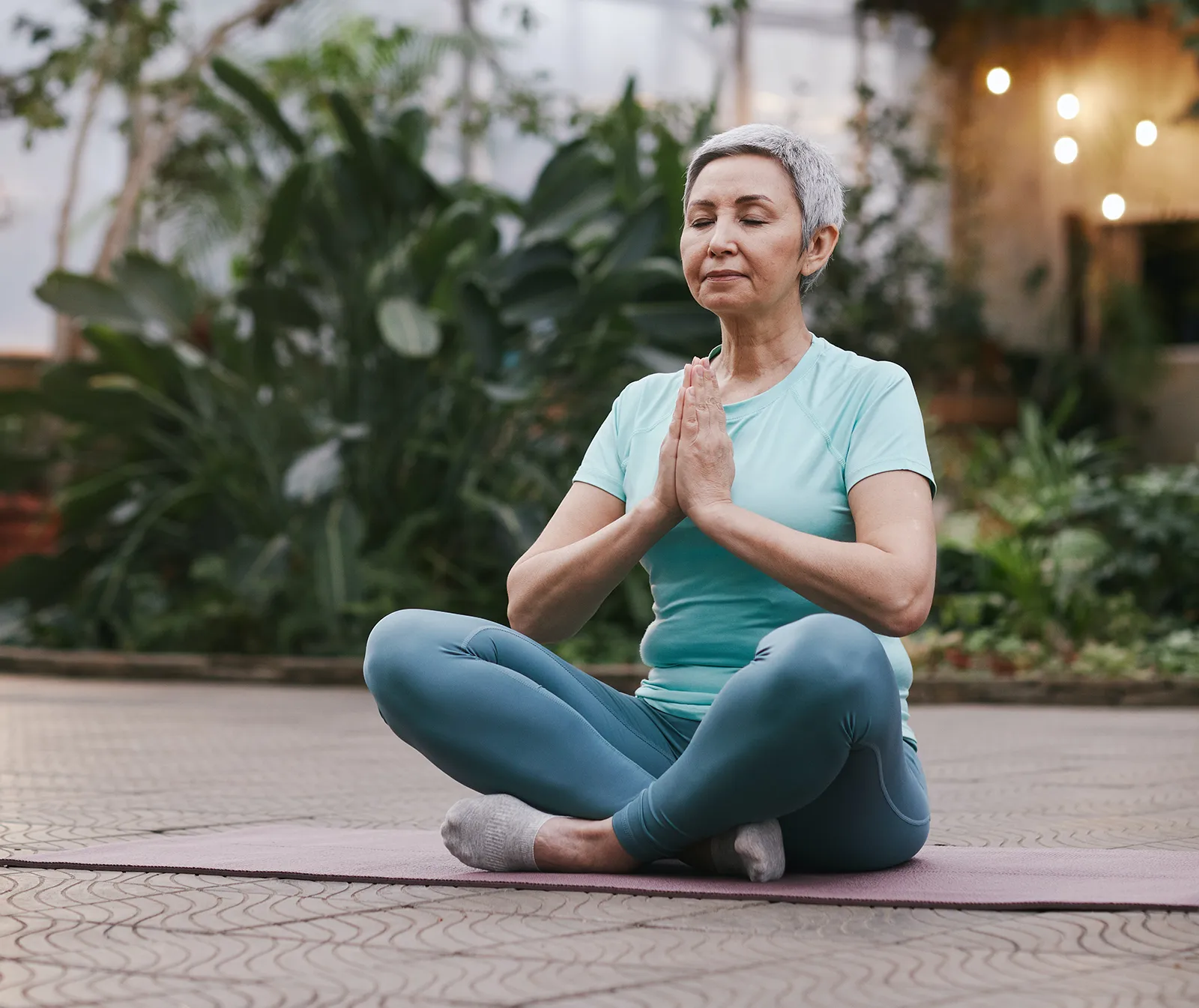
With thoughtful breathing, you are practicing mindfulness or meditation. When you give yourself the gift of your generous attention, you are meditating. And you are likely meditating throughout your day—every time you step out of autopilot and reconnect yourself to the present moment.
More than ever, there's an assault on our attention as external messengers vie for our eyeballs and pocketbooks in ways that diminish our inborn capacity to source and know what is true for us. Being inundated by perpetual digital notifications, popups, and sales campaigns—compounded by the recent advent of "fake news" and notoriously erroneous "alternative facts" on social media—results in widespread feelings of confusion, FOMO (fear of missing out), alienation, or even enemy patterning.
To dissolve feelings of disconnection, doubt, and uncertainty, we turn to the self-care practice of meditation. Self-care is all about becoming more self-aware, and meditation is a reliable practice for reconnecting us to our true nature. Our true nature is connected, focused, calm, and open to discovery, and meditation allows us to experience our own truth like a wellspring rising up from the inside out.
Meditation is not reserved for enlightened, holy, or sacred people, and it is not hard. Meditation is not about stopping thoughts. You don't have to do it for a long time to get benefits, and you need zero religious or spiritual beliefs to practice it. Meditation is simply an activity that sustains our attention and/or broadens our consciousness.
Meditation is personally experienced as an expanded awareness of our self and our relationships with others, the universe, and the present moment, which is embodied in moments when time flies, when you feel energized by a connection, or when you're feeling immersed in what you're up to. You might experience this mindfulness while walking in nature, playing with your kids, washing dishes, or making dinner. And for many of us, mindfulness is experienced during a bodywork session. A regular meditation practice allows us to let go of unnecessary effort, tension, and resistance in favor of feeling at ease and dropping into the flow of life.
Many athletes describe the feeling of being in the flow of life as a meditative state or "being in the zone." Psychologist Mihaly Csíkszentmihályi calls it the "flow state," which he describes as occurring "when every action, movement, and thought follows inevitably from the previous one."1 The meditation app Headspace describes flow state as: "When your whole being is totally focused on something beyond the point of distraction, time slows down, your senses are heightened, you are at one with the task at hand, when action and awareness sync to create an effortless momentum."2 The beauty of the flow state is that it is accessible to everyone.
When we're in a flow state, we open a space for insight and discovery to emerge. We discover the perfect technique to unlock our clients' pain. We may discover the right words to create closeness with a family member, child, or loved one. Or perhaps we discover new ways of being and doing that generate creative possibilities, ideas, or visions. And when we are regularly generating a flow state, we access and reconnect to our personal truth. We make space between the conflicting messages outside our mind (or the jumbled thoughts within) in favor of coaxing, revealing, and expressing our true nature.
Just as there are many forms of meditation, there are many pathways to your truth. Flow states and embodiment practices allow us to acknowledge the unimpeded nature of our true self. Meditation, in any form, trains our focus to the present moment and promotes a body-mind connection that is calm, clear, content, and at ease. Studies demonstrate that a host of benefits (including clearer purpose, pleasure, and life satisfaction) can be obtained in as little as two minutes of daily meditation.3 We invite you to choose a pathway each day that nourishes and reveals your true nature!
We invite you to try this body scan as a way to invite your personal truths and body wisdom to emerge.
Optional Variation: If you would enjoy an active version of your body scan, squeeze or tighten your muscles with each inhale in sequence from feet to cranium. And then practice becoming as still and relaxed as possible on each out-breath.
Continue giving yourself the gift of extra breaths and time to luxuriate in any newfound awareness, refreshment, and flow you've generated during the body scan. If you fall asleep, trust that is exactly what your body and mind needed in the moment.
John Geirland, "Go with the Flow," September 1, 1996, www.wired.com/1996/09/czik.
Headspace, "What is a Flow State and What are Its Benefits?" accessed March 2021, www.headspace.com/articles/flow-state.
Dan Buettner, The Blue Zones of Happiness: Lessons from the World's Happiest People (Washington, D.C.: National Geographic, 2017).
Sources: https://doi.org/10.1001/jamainternmed.2013.13018), https://doi.org/10.1038/tp.2016.164, http://www.bluezones.com/2018/11/can-meditation-really-slow-ageing, https://doi.org/10.1523/JNEUROSCI.5791-10.2011, https://doi.org/10.1016/j.bbi.2012.10.013, https://doi.org/10.1007/s10865-017-9884-5, https://doi.org/10.1016/j.pscychresns.2010.08.006, https://doi.org/10.1370/afm.1376.
It’s easy for us to get stuck in our work—physically, mentally, emotionally. Let’s look beyond the usual self-care routines to find better ways to get unstuck and back to the work you love.
Therapy tools can help massage therapists with pain or limited mobility.
Transdermal magnesium can help massage therapists and bodyworkers in their self-care.
Self-defense skills can help MTs feel safer and more confident in the treatment room.