The public still struggles to tell the difference between a massage therapy practice and a parlor. Even in 2021, legitimate massage therapists are lumped in with sex workers, which puts them at risk.
Here, we will discuss 10 ways to keep your practice safe—from making it clear you are a licensed massage therapist to security methods and tools to keep unwanted solicitors out of your practice.
1. Screen Every Client
If you screen all your clients before scheduling them, you will keep the majority of unwanted customers from ever stepping foot in your office. Look at it this way: If you make the scheduling process a bit of a chore—as in having to take a few steps to get on your schedule—it will attract serious, invested clients to your practice. Making the booking process a commitment attracts clients who are committed to working with you and following your treatment plan.
Ask screening questions before scheduling a client. Ask them about their goals and expectations for massage therapy. This screening sets the tone that you have a medically based, therapeutic practice.
Gather personal information up front. Someone looking to commit an illegal act may want to avoid giving confidential information, and this could keep them from booking. If a new client is hesitant to give you their address or last name, that should be a major red flag.
Hold a credit card. Some therapists choose to hold a form of payment on file—or even a copy of the new client's driver's license—when booking a first-time appointment.
Pre-fill the intake form. Some therapists have clients fill out an intake form online before their first appointment. Use what works for your specific practice and clients.
Keep in mind, most of your clients are well-meaning, so the barriers should be there to deter and stop solicitors, not to make scheduling so cumbersome that you lose your dream clients.
2. Spot the Red Flags
Become adept at spotting any red flags, either subtle or blatant, that a client may be looking for a "happy ending."
Adobe Stock.
Be aware of code words, behaviors, and hints that solicitors may use to "bait the hook" and push boundaries to see how far they can go with you. If a client is looking for an illegal service, they may not just come out and ask for it. They may hint at it in ways that could go over the head of a therapist who does not know what to look for. (Note: The Respect Massage Ethics Course has a complete list of red flags, so you can spot a solicitor from a mile away and keep them from even getting on your schedule.)
3. Make Messaging Clear
Be mindful of the words you use in your marketing. Never include words like sex, sexual, happy, or ending in your social media or on your website. Google does not know you are using those words as a deterrent, and you could end up in searches that include those words.
The Respect Massage Zero Tolerance logo is a simple, clear way to say your practice does not provide any sort of sexual experience. The logo is available free of charge along with a free membership at respectmassage.com. Place the logo on your website as a deterrent for solicitors. At respectmassage.com, there is a policy you are welcome to use to accompany the logo. This policy describes what it means to be a Respect Massage member and is carefully worded to avoid any unwanted buzzwords that could potentially associate your practice with sexual massage.
4. Include a Lock with a View
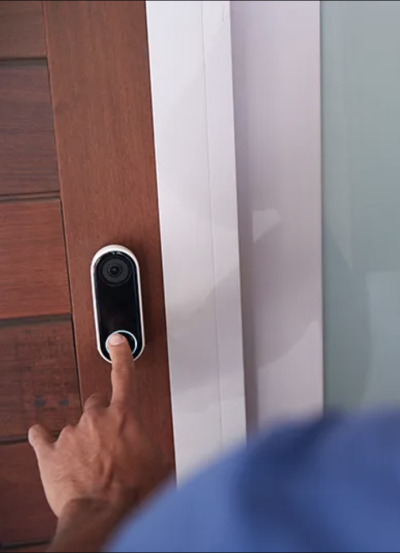
It is easy to keep the door locked and only let in scheduled clients, but take this precaution a step further to increase your safety tenfold. When clients arrive at your door, first identify that they are the client you are expecting by using a doorbell with a camera and audio. You will have control over who comes in, as well as the ability to see and speak to anyone at your office door.
Respect Massage is a resource to protect massage therapists from sexual solicitors. The Respect Massage mission is to educate and empower massage therapists so they can easily spot, deter, and escape from clients who are looking for "happy endings" or "extras." For more information, visit respectmassage.com.
Using a doorbell with a camera and audio helps you avoid letting in unwanted visitors, and you can unlock your door with your phone from anywhere in the office. Using a doorbell of this type also eliminates the stress of waiting at the front door to let clients in and alleviates concerns if they arrive early (or late), or if you are with a client, in the restroom, changing over the treatment room, or eating your lunch.
Make sure the lock works in a way that lets you get out quickly. Not letting in unwanted people is important, but being able to get out of your office is just as important—especially in an emergency when seconds count.
5. Push the Button
One device I love is a panic button. These are small, wireless, easily hidden buttons that can be placed anywhere (under the massage table is a favorite spot of mine). Using a panic button is a discrete way to de-escalate a potentially dangerous situation.
iStock.
These devices can be programmed to alert any contact you choose with the push of a button. For example, you can alert your front desk staff, who can then knock on the treatment room door and say you have a family emergency. You can also set the button to call police or emergency services. Imagine how handy it would be if you had a client with a medical emergency and could quickly call for help without having to leave your client's side.
6. Have an Escape Route
Make sure you have a clear path out of your office that you plan before you have an emergency situation. Do not pile laundry or have décor in the way of you getting out of the building safely if you have to run away. Consider all doors and windows fair game.
7. Know What to Say
Prepare excuses to end a massage ahead of time. A concern I hear from massage therapists who are faced with a client who is being inappropriate is they do not know how to end it. Or they are afraid if they call a client out on inappropriate behavior, the client will get mad and possibly become violent.
If your intuition is telling you you're in danger, trust it. Do not suffer through uncomfortable and potentially dangerous situations for longer than you have to just because you do not know how to end the session early. Get out as soon as you realize there is a problem.
Have excuses prepared beforehand. This allows you to easily access them in a stressful situation. You might say you are not feeling well and leave the room. You could sniffle and say you need to step out to blow your nose and wash your hands. Whatever you need to do, get out of the room and take the appropriate action (run, get help, call the police, whatever you deem appropriate and necessary to that specific situation).
As soon as you identify a dangerous or inappropriate situation unfolding, immediately remove yourself from the source of the danger.
8. Be Neighborly
If you ever need help, having relationships with your neighbors will make any interaction smoother. Make sure the businesses and/or homeowners near your office know you. Introduce yourself, exchange phone numbers, greet them when you arrive to work, and say goodbye when you leave. That way, if there is an emergency and you have to run out of your office, you will have somewhere to run to.
Pexels.
Be active in your local massage community. Know the other therapists work in the surrounding area. That way, you can form a local network of therapists who can warn the others if someone in your area is soliciting and/or dangerous. Also, you will have the additional benefit of knowing other massage therapists to bounce ideas off, practice new techniques on, or to go to continuing education classes with.
9. Market to Your Advantage
The way you market your business can attract your ideal client or the client of your nightmares. Clarity surrounding who you want to work with leaves less room for clients who do not fit your criteria. Have a specialty, and home in on the exact population you want to work with to deter inappropriate clients.
Clarity includes images you use in your marketing too. Use pictures of you working in your office on a client who resembles your ideal client. Stock photography is a gross misinterpretation of what massage therapy truly is. Veer away from images of perfect-looking therapists. If you use images like this, it will attract clients who are not necessarily looking for the therapeutic benefits of massage.
10. Trust Your Gut
I know, you hear it all the time, but it's true. Your intuition is your best protector. If something seems off, it probably is. Get out of the situation safely. The best way to protect yourself and your practice from dangerous people is to avoid them altogether. If your gut instinct says something is off with a prospective client, do not schedule them. No amount of money is worth your safety.
Respect Massage Policy
Massage therapists who are members of Respect Massage hold themselves to the highest standards of an ethical, boundary-driven practice. Respect Massage members have a zero-tolerance policy for solicitations of any kind. Jokes, innuendo, and inappropriate requests are taken seriously and will result in the swift termination of the session. When choosing a practice displaying the Respect Massage logo, you can have confidence in the safety and professionalism you will experience as a client.