

Superior Outcomes
A treatment plan is what elevates massage therapy from a service to a therapeutic profession. It is the tangible output of our clinical reasoning.
In 1990, two psychology professors, Peter Salovey and John D. Mayer, were chatting about politics while painting a house. The discussion, which centered around research on cognition and emotion specifically related to politics, culminated in the question: "How could someone so smart act so dumb?" The conclusion they landed on was that smart decision-making requires more than intellect.
Because of this conversation, the professors decided to publish an article in an obscure journal that was read by psychologist and science journalist Daniel Goleman. Goleman was so moved by this concept that he turned it into a best-selling book: Emotional Intelligence: Why It Can Matter More Than IQ. It took off like a rocket and is now taught worldwide—from hospitals and corporations to government agencies and, of course, schools. It has recently made its way into massage therapy curriculum.
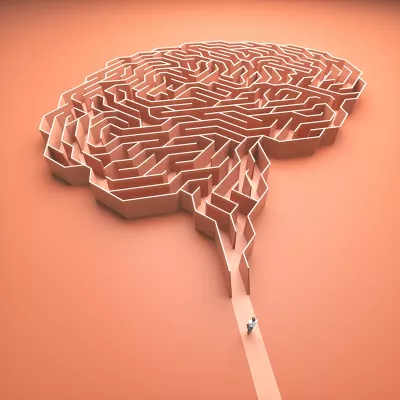
But like any great concept, more than just knowing it should be applied; it's useful to know why and how. That's what we will explore here.
Emotional intelligence is the ability to identify and manage one's emotions and respond effectively to the emotions of others. It is made up of four domains—self-awareness, self-management, social awareness, and relationship management.
Self-awareness is knowing what you are feeling at any given time and understanding the impact those feelings have on yourself and others.
Self-management is the ability to supervise and direct one's own thoughts, feelings, and behaviors in any given situation without surrendering to impulse. It involves:
Social awareness is the ability to consider the perspectives of others and apply them to your interactions with others. This requires:
Relationship management is the ability to inspire the best in others. This involves:
Life is a series of stimuli and responses. Massage therapists are keenly aware of this, as we work with manipulating tissue that is in the state it's in because it is responding to stimulus. Massage therapists become a new stimulus to the nervous system by using techniques to decrease stress, unwind muscular tension, increase or decrease nerve firing, and educate on daily activities that help or hinder healing.
Emotions are stored in the body as a result of experiences. When a person experiences an emotion, their physical body responds. All you have to do is conjure a memory of a scary or joyful experience, then feel what happens in your body. People remember experiences all day long, so it's easy to deduce that our bodies respond to those memories all day long—often without even being noticed.
So, when we touch our clients, we interface with all these physiologic responses. Even if our connection to emotional awareness lies only in our hands-on work, we already provide a powerful tool for potential change. Even silent acknowledgment through your quality of touch—saying in your mind, "I recognize there is a response happening here"—carries weight.
But it doesn't stop there.
Let's say you have a client who regularly comes in with a poor attitude. Do you pick that up, or do you influence change through your own attitude and state of presence?
Let's say you have a client who is continually late for appointments. Do you resent them, or do you self-manage by creating healthy boundaries (through the enforcement of your practice's policies) and allowing the client to choose to show up on time or show up late and receive a shorter session? The latter need not affect you emotionally. It's neutral and accepting.
Let's say your practice isn't growing and you are struggling financially. Do you complain no one values your work or their health enough to return? Or do you take action toward finding the root cause of the challenge and take an honest look at what you can do differently (such as educating yourself on proven marketing approaches)?
A practitioner with emotional intelligence skills can remain calm, composed, and rational even while dealing with a difficult client or angry colleague, or when facing an obstacle. They can find a positive approach. They also recognize struggle in others and offer patience, compassion, and modeling of healthy boundaries and self-care strategies.
It's one thing to identify the ideal skills to acquire. It's another to use real strategies to develop these skills. An internet search of "emotional intelligence strategies" yields a plethora of recommendations. I'll provide one simple strategy that can be used right away.
The STOPP Technique is a simple mindfulness practice developed by scientist, writer, and meditation teacher Jon Kabat-Zinn, PhD. It can be used in any situation in which you feel triggered or in need of coming into the present moment or want to become aware of yourself and those around you.
S—Stop what you are doing. Become still. If needed, find a quiet place to yourself.
T—Take a deep breath (or three) or direct all your focus on noticing the breath going in and out of your nose. You can also sigh on the exhale to keep the energy of the emotion moving. Some describe emotion as "energy in motion."
O—Observe. Ask yourself:
P—Pull back. Put the situation in perspective. Ask yourself:
P—Proceed. Stay the course, or practice a different way. Ask yourself:
When emotional intelligence skills are applied, you become far more aware of what is happening within and around you and can make conscious decisions on how to move forward. When it comes to professional interactions, practicing and applying these concepts fosters great communication skills, which supports your professional relationships, your quality of touch, and your career performance and success.
Keep in mind, shifting the way you talk to yourself (especially in challenging situations) precedes successful communication with others. Eventually, you model for others what authentic relationship and peaceful existence look like. All of this spawns multidimensional healing.
A treatment plan is what elevates massage therapy from a service to a therapeutic profession. It is the tangible output of our clinical reasoning.
Context is powerful: Even light, mindful touch can significantly shift pain and proprioception, reminding us that how we work matters as much as what we do.
Deep gluteal syndrome can be triggered by multiple causes. Sorting through those causes can be tricky, but doing so will also help your clients.
Considering the situation that led to your client’s pain can prove as valuable as understanding where the pain exists.